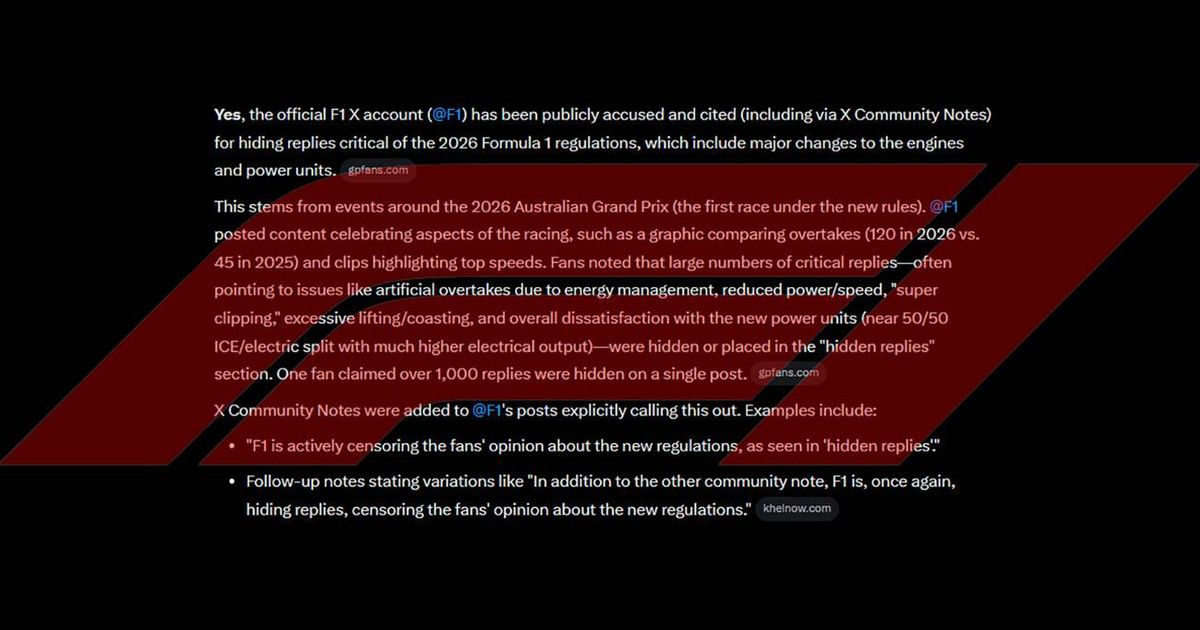
Formula 1 has recently come under scrutiny after reports emerged that the sport's official social media channels are hiding or suppressing replies that are critical of the upcoming 2026 regulations. Fans and observers have noticed that certain comments, especially those expressing dissatisfaction or concern about the new rules, are either being hidden or not responded to publicly.
This practice has sparked a backlash among the F1 community, who argue that transparency and open dialogue are essential for maintaining trust between the sport's organizers and its global fanbase. Critics suggest that by hiding critical responses, F1 may be damaging its reputation and alienating supporters who value honest communication.
The 2026 regulations, which include significant changes to engine specifications and technical rules, have already been a contentious topic. Many fans and industry insiders have voiced concerns about the potential impact on the racing spectacle, costs, and the competitive balance among teams. However, the recent reports indicate that the sport's social media managers are actively moderating discussions to prevent negative sentiments from gaining visibility.
Social media platforms are crucial for engaging with fans and promoting the sport, but the practice of hiding or filtering replies can be perceived as censorship. This approach may lead to increased frustration among followers who feel their opinions are being silenced or ignored. Critics argue that fostering an open environment for discussion is vital for the sport's credibility and growth.
In response to the controversy, some fans and commentators have called for greater transparency from F1 officials. They emphasize that constructive criticism can lead to improvements and that hiding dissenting voices only fuels suspicion and mistrust. The situation highlights the ongoing challenge for sports organizations to balance managing their online presence while respecting free expression.
As the 2026 season approaches, the controversy surrounding social media moderation adds another layer of complexity to F1's efforts to connect with its audience. Moving forward, it remains to be seen whether the sport will adopt more open communication strategies or continue to suppress critical responses in the digital space.
Ultimately, the incident underscores the importance of transparency and honest engagement in the digital age, especially for high-profile sports like Formula 1. Fans expect open dialogue, and how F1 handles this situation could influence its relationship with supporters worldwide.